You can have the right message, the right timing, even the right intent, yet still struggle to get people to notice, let alone respond. Most of the time it’s not because people don’t care, it’s because the experience around it doesn’t invite them in.
Our work with Stellantis UK is a good example of how small, tangible moments can shift that.
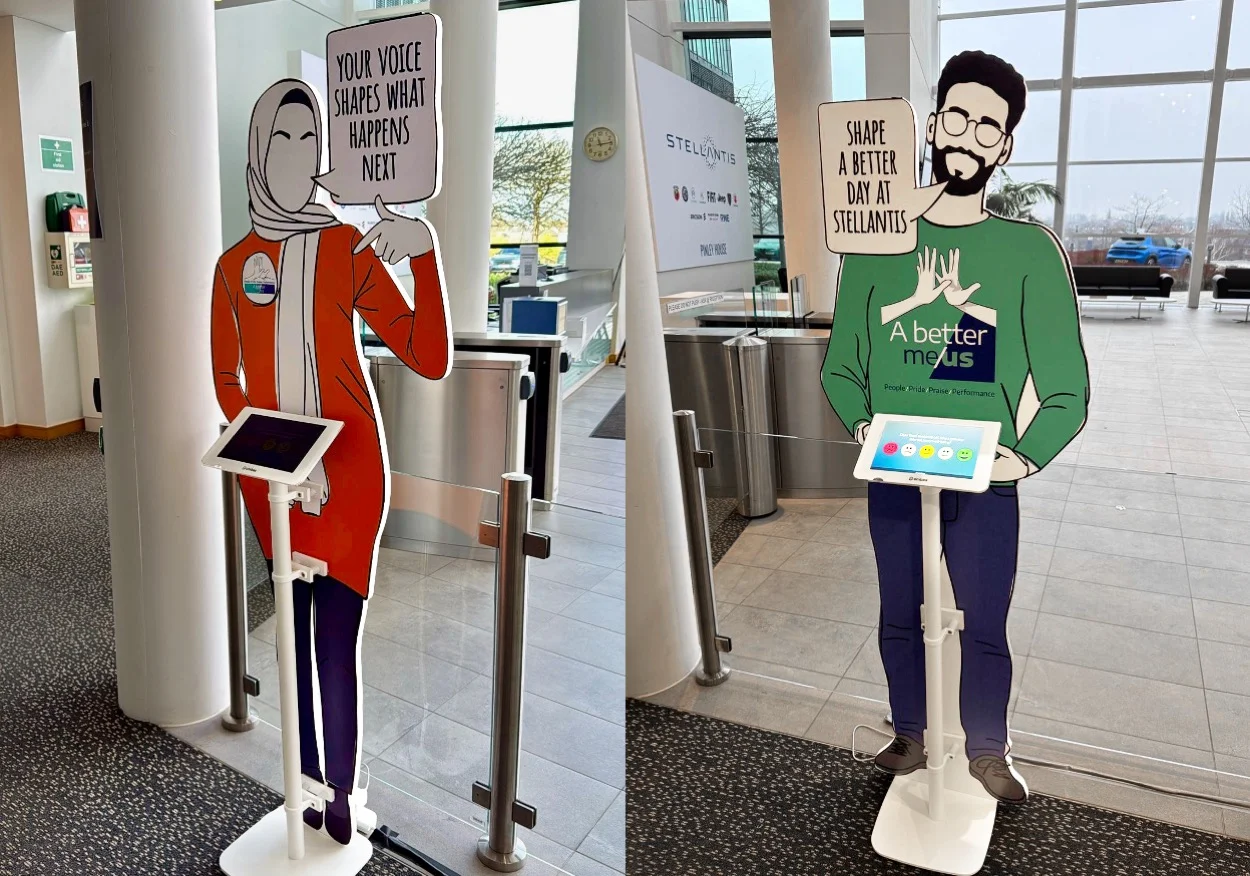
We introduced feedback terminals across HQ – something visible, easy to use and sitting naturally in the flow of the day rather than buried in an inbox. But they’re really just one expression of a much bigger piece of thinking around Stellantis UK’s internal comms.
What does it look like when communication feels human? When it’s clear, consistent, and shows up in places people already are? When the brand does a bit of the heavy lifting, so the message doesn’t have to shout?
That’s where design earns its keep. The characters, the tone of voice, the simplicity of interaction – even the choice between a quick tap or a QR code for later – it all works together to lower the barrier just enough.
It’s easy to think of internal comms as channels and content. In practice, it’s closer to experience design. And when you get that right, engagement tends to follow without quite so much chasing.
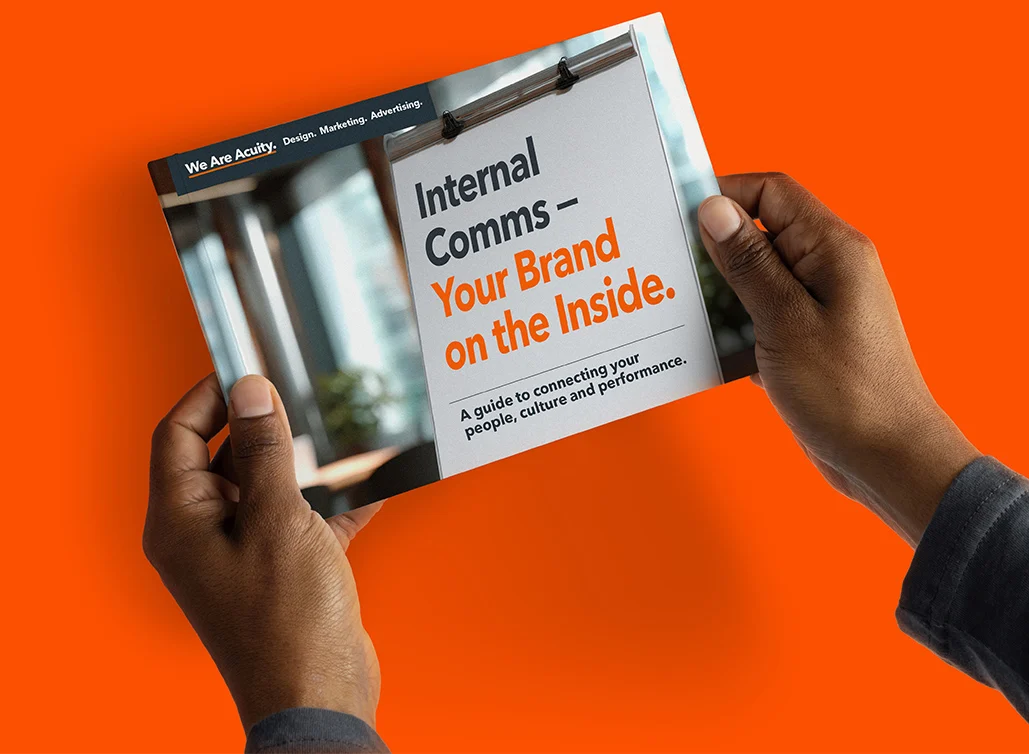
We’ve put together a guide on the same theme. If it’s something you’re wrestling with, check it out: