How we used AI to build our Festive slot machine.
This year’s We Are Acuity Christmas card is a little different.
We’ve built an interactive ‘Festive slot machine’ on our website. Three spinning reels reveal our festive local heroes and the work they have delivered behind the scenes for clients. It’s playful, on brand, and shows the breadth of what we do in a very Acuity way.
So what?
I’m not a developer. But I designed and built the whole experience, including HTML, CSS and JavaScript, with the help of ChatGPT.
This is not a story about replacing coders. It is a story about how AI tools, in the right hands, can unlock more creativity, more efficiency and more options for clients.
How we used AI to build our Festive slot machine.
Before we talk about AI, it is worth remembering that we have quietly embraced ‘robotic’ helpers in our work for decades.
• Spell checkers and grammar tools that catch typos for us
• Photoshop actions that batch resize, apply multiple filters, recolour or output assets
• Scripts, templates and presets in design and video tools
• Formulas and macros in spreadsheets
All of these are, in their own way, automation. Little robots that sit alongside us and remove some of the repetitive effort.
AI is the next step in that journey. The difference is that instead of only following rigid rules, it can work with natural language, interpret intent and help bridge gaps in skills, like coding.
We wanted to show that, just as we quietly help our clients plan launches, campaigns and local activation so everything “just works” for their customers, our own festive activity could feel magical on the surface yet highly organised behind the scenes.
The mechanic became a slot machine:
• Three spinning reels at the top
• A reveal panel underneath, with imagery and copy
• Ten possible outcomes, including our Christmas team characters and recent case studies
• A rule that every outcome must appear once before any repeats
• Smooth scrolling so mobile users see the reveal straight away
• All fully responsive inside our HubSpot site
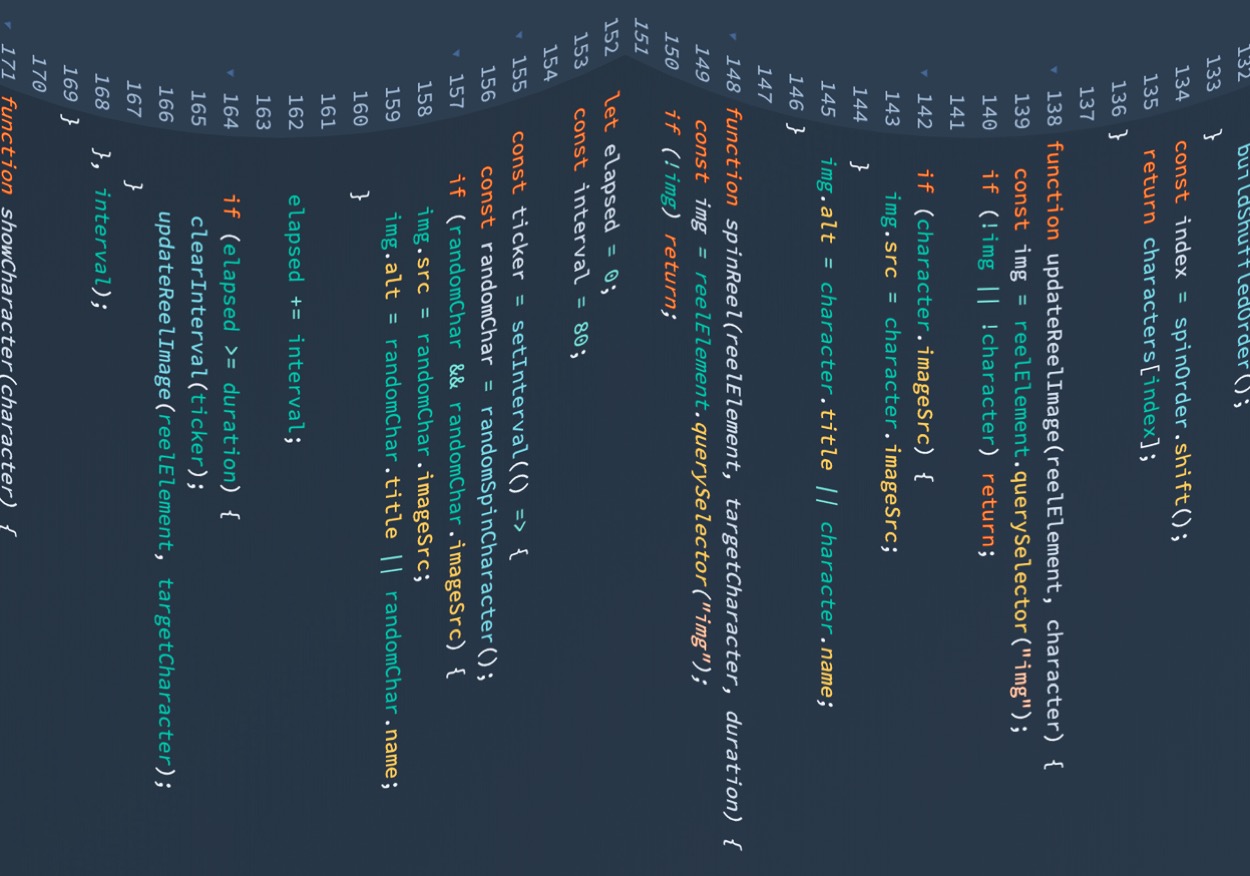
That’s more than a simple landing page. It needed HTML structure, CSS for layout and styling, and JavaScript to handle the slot logic, animation timing and user interactions.
Historically, that would have meant me as Creative Lead plus a developer to code and debug the page.
This time, I had a different partner.
ChatGPT did not “come up with” the idea. That was our job.
What it did do brilliantly was help me turn a clear creative vision into working code.
Over the course of a long, iterative conversation, I used ChatGPT to:
• Rough out the HTML structure for the card, slot machine and reveal panel
• Style it with CSS to match our brand palette, typography and the snowy background we designed
• Write and refine JavaScript to
- – randomise the results
- – make sure all 10 outcomes appear before any are repeated
- – animate the reels
- – swap the images and bios
- – scroll to the right place on desktop and mobile
Along the way we made a long list of small but important improvements:
• centring and resizing the reels so they feel like a proper machine
• adding a default state before the first spin
• introducing a second ‘Spin again’ button at the bottom of the reveal
• tweaking spacing, line lengths and typography for readability
• adjusting behaviour so the page feels intuitive on both mobile and desktop
I stayed firmly in the driving seat. I chose the visual direction, wrote and edited the copy, decided what the machine should do and how it should feel to use. ChatGPT gave me the code, explained what it was doing and helped fix the inevitable glitches along the way.
Let's talk.
FREE DISCOVERY CALL
see how we can maximise your marketing.

This is the bit that matters.
Developers are not suddenly redundant because a creative can get help with some front end code.
What changes is how we use their time:
• AI makes it easier for non coders to build and maintain simpler interactive experiences, especially within platforms like HubSpot.
• That frees specialist developers to focus on the things AI cannot sensibly own: complex systems, integrations, performance, security, data, custom applications and long term architecture.
• When we do need a developer to get involved, we can give them a much clearer starting point: a working prototype, cleanly commented code and a defined user journey.
In other words, AI helps move some tasks from “needs a developer” to “can be handled by the creative lead”, without removing the need for expert development at all.
From a client’s perspective, that means:
• faster turnarounds for campaign microsites and interactive content
• more room for experimentation and iteration
• and better value overall, because the right skills are being used in the right places.
None of this works without human judgement.
AI does not know your brand. It does not understand your audience, your tone of voice or your commercial priorities. It does not spot when something feels “off” or could be simpler.
On this project alone, humans were responsible for:
• the core idea and positioning: “Christmas works at We Are Acuity”
• the character development for our local Christmas heroes
• the storytelling that links those festive roles to real client work
• the decision that a slot machine was the right mechanic (not another advent calendar)
• the look and feel of the page, imagery and layout
• the QA: does this feel right, read well, behave sensibly on mobile and reflect our standards?
AI simply accelerated the translation of that thinking into a functioning experience.
For clients of We Are Acuity, this is good news.
It means:
• more of your budget is spent on ideas, quality and effectiveness
• interactive and technical elements are no longer barriers, they are options
• we can move faster from concept to reality, test and refine in live environments
• and our strategists, creatives and local marketing specialists are empowered to make more happen for you directly.
AI in our world is not a replacement for expertise. It is a multiplier for it.
If you’d like to see what that looks like in practice, you can spin the reels yourself… soon.