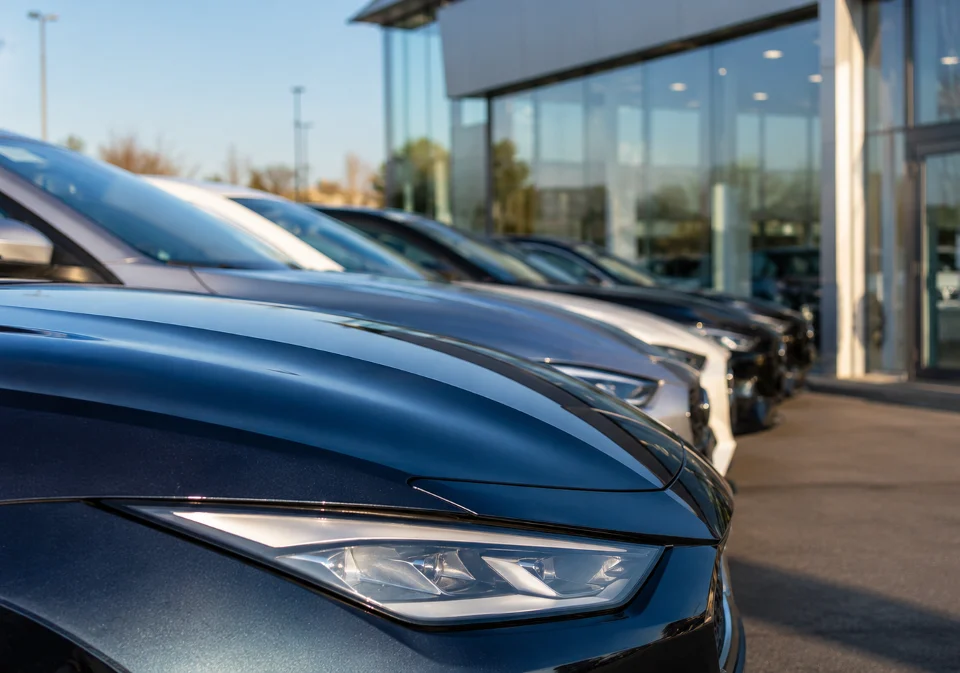
Over the years, a great deal has been written about what the future of automotive retail will look like.
There have been constant attempts to redefine the customer journey. From direct sales to click-to-buy. Agency models to digital showrooms.
You name it, and someone has proclaimed it to be the future.
Of course, these have all been important developments. Yet research from Cazoo’s latest Consumer Insight Panel, reported by Automotive Management (AM) Online this week, suggests car buyers still overwhelmingly favour the dealership experience.
The research, which questioned 2,008 car buying decision makers, found that nearly three-quarters, 72%, still want to see, test drive and buy their next car at a dealership.
That is not a small number.
It is also not a one-off. Cazoo said the figure has remained consistent across its last three surveys, reinforcing a trend seen over the past few years.
Interestingly, the proportion of buyers who want to view and test drive at a dealership before purchasing online has edged up from 19% in 2022 to 21%. Meanwhile, those who only want to view and buy online has dropped from 11% to 8% over the same period.
The same research also highlights the value buyers still place on human interaction. More than half of respondents, 53%, said they would rather speak to a member of dealership staff than an AI-powered phone assistant.
That will almost certainly change over time as AI tools improve and customers become more familiar with them. But for now, it is a useful reminder that technology needs to support the retail relationship, not replace it too bluntly.
It is something anyone close to the retail end of the automotive market will recognise.
When it comes to buying a car, like many other forms of retail, people still want reassurance.
They want to see it. Sit in it. Ask questions. Understand the numbers. Compare options. Talk to somebody local. Test the decision before they commit to it.
In other words, the physical experience is more important than ever.
Not instead of online, but complemented by it.
The buyer journey has undoubtedly changed. Customers are researching earlier, comparing more, arriving better informed and expecting far more transparency than ever before. Digital channels are doing an enormous amount of the heavy lifting, from awareness and research through to finance exploration, part-exchange valuation and enquiry.
But that does not mean the local retailer has become less relevant.
In many cases, it means the opposite.
The local dealership is now the point at which brand promise, product complexity, finance, trust and human reassurance all have to come together. That is especially true in a market where customers are considering new brands, new technologies, new ownership models, changing regulation and, in many cases, higher purchase costs.
Recent Cox Automotive Inc. research in the US makes a similar point. Their 2025 Car Buyer Journey Study found that 28% of shoppers intended to complete the whole purchase online, but only 7% actually did so. More than half still bought entirely in person, while many others used a combination of online and offline steps.
That is the bit we should be paying attention to because like in most retail sectors, this is not online versus offline.
This is blended, with the physical experience still playing a critical role in creating confidence.
The UK market is moving quickly too. New car registrations in May 2026 rose by 7% to 160,662, the strongest May performance since before the pandemic, with battery electric vehicles accounting for more than 27% of the market.
That growth is encouraging, but it also brings complexity.
A customer considering an EV is not just choosing a car. They are thinking about charging, range, tariffs, home installation, public infrastructure, residual values, tax, incentives and whether the car will genuinely fit their life.
That is a lot to process.
Recent Autotrader research, reported by The Times, also highlights confidence gaps around EV adoption, including knowledge and public charging concerns.
And this is where I think automotive brands and retailer groups have a major opportunity. This is not about getting more traffic online. It is about connecting national brand activity with local retailer marketing properly.
A national brand campaign might create desire.
A manufacturer website might create interest.
An Auto Trader listing might create comparison.
A finance calculator might create momentum.
But very often, it is the local retailer, and the quality of the human interaction, that creates confidence. And confidence is what converts.
At We Are Acuity, this is the space we have worked in for many years, the space between national brand strategy and local retailer execution.
It is a deceptively difficult space in any sector.
On one side, brands need consistency, control, compliance and performance. They need every retailer, dealer or franchise partner to represent the brand properly.
On the other side, local retailers need relevance, speed, flexibility and commercial usefulness. They need marketing that speaks to the audience in their area, reflects their local stock, supports their sales priorities and feels like something they can actually use.
Too much central control and local marketing becomes generic.
Too much local freedom and the brand becomes fragmented.
The skill is in making both sides stronger.
That might mean campaign toolkits that allow a retailer group to activate national messages with local offers, local imagery, local events and local calls to action.
It might mean a Local Marketing Hub that gives every site access to compliant, customisable materials across digital, print, outdoor, radio, video and social.
It might mean dealer adoption programmes, where the real work is not just building the platform, but helping people use it properly.
It might mean local media planning that reflects real geography, not just neat lines on a map.
It might mean creative templates designed with enough flexibility to be genuinely useful, while still protecting the brand.
And, increasingly, it means joining up the data, so brands and retailer groups can understand what is being used, what is performing and where support is needed.
The point is simple.
If the dealership remains central to the buyer’s decision, then local marketing cannot be treated as an afterthought. It is not just the final mile. It is where a significant part of the commercial outcome is won or lost.
The brands that will perform best are likely to be those that understand the modern automotive journey as a connected system.
National demand creation → Digital research → Local reassurance → Retailer confidence → Measurable follow-up.
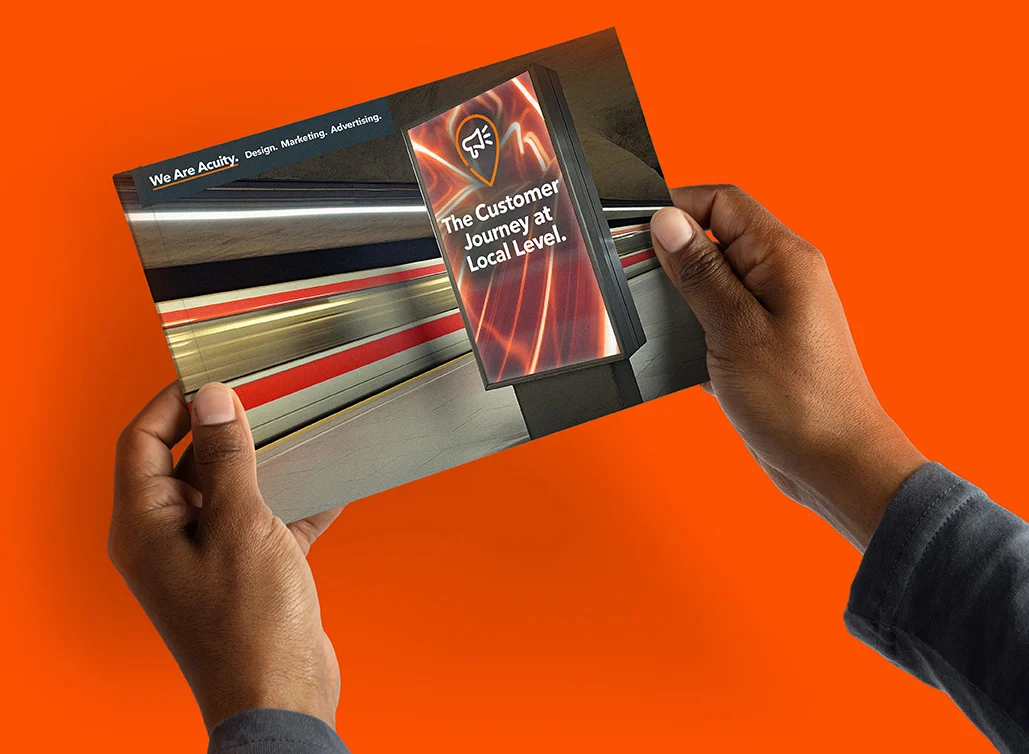
Digital is not replacing the physical experience – it is raising the standard of what the dealership needs to deliver.
And that means brands and retailer groups need to ask themselves a few important questions.
• Are our retailers equipped to convert the demand our national campaigns create?
• Are our local marketing materials genuinely useful, or just compliant?
• Can each site personalise activity without drifting off-brand?
• Are we helping local teams explain complex subjects, such as EV ownership, finance, servicing and aftersales, in a way customers can trust?
• Do we know which local campaigns are being used and which are working?
• And perhaps most importantly, are we making it easy for the network to do the right thing?
Because if customers still value the dealership, then the dealership needs to be empowered, informed, visible, relevant and credible throughout the journey.
Not just at the point of sale. At every local moment that builds confidence.
That is where automotive marketing becomes really interesting. And it is where the connection between brand and retailer has never been more important.
Let's talk.
FREE DISCOVERY CALL
see how we can maximise your marketing.